LED vs. Incandescent Bulbs: What Home Shoppers Need to Know
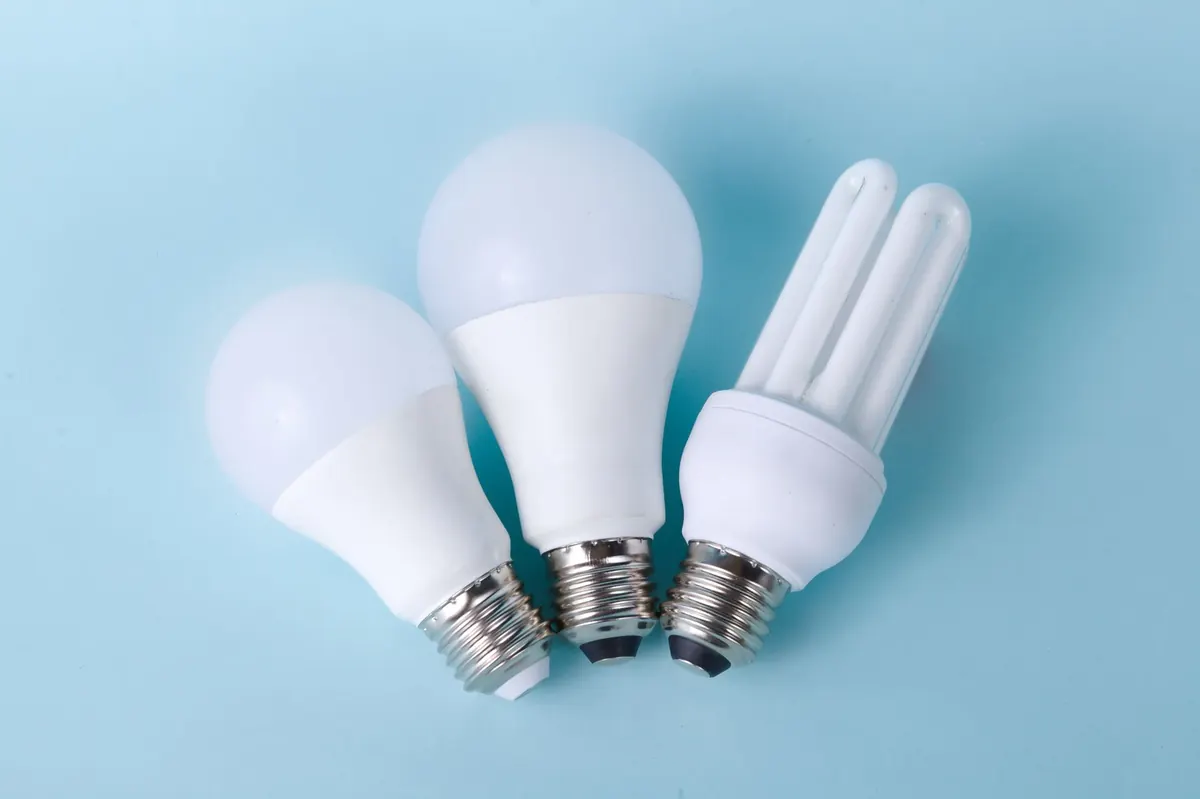
Stand in the lighting aisle and every box looks roughly the same. A few numbers, a picture of a bulb, a promise about saving energy. But the bulb you carry home decides how a room feels at night, how often you haul out the stepladder, and how much of your electricity bill goes toward light you barely notice. The labels have gotten busier over the years, and a couple of the numbers on them mean the opposite of what shoppers assume. Here is what actually matters, and how to choose with confidence.
Start With Lumens, Not Watts
For most of the last century, watts were a reliable shortcut: a 60-watt bulb was brighter than a 40-watt bulb, and that was that. Then LEDs arrived and broke the logic. A watt measures power drawn from the socket, not light produced. Lumens measure light. An LED that delivers 800 lumens might draw 9 watts; an incandescent delivering the same 800 lumens draws about 60.
So when you shop, read the lumen number first and treat the wattage as a footnote. Old habits die hard, which is why so many packages print a wattage equivalent in large type. Use it as a translation key rather than the main event.
- Around 450 lumens — similar to an old 40-watt bulb, good for accent lamps and closets
- Around 800 lumens — the classic 60-watt replacement, the workhorse for table lamps and ceiling fixtures
- Around 1,100 lumens — roughly a 75-watt equivalent, useful in kitchens and workshops
- Around 1,600 lumens and up — the old 100-watt territory, for rooms where you need to see detail
Energy Use: Where the Difference Really Shows Up
Put your hand near an incandescent bulb that has been on for a few minutes. That heat is electricity that never became light. Most of what an incandescent draws leaves as warmth, which is why lampshades carry warnings and why recessed cans get uncomfortably hot.
LEDs convert far more of their input into visible light and run warm rather than hot. The gap matters most when you multiply it across a house. A single swapped bulb is a rounding error on a utility bill. Twelve of them, burning four or five hours a night, is a real difference — and in summer, you are also paying to air-condition away the heat the old bulbs added. In winter that heat is not entirely wasted, but it is an expensive way to warm a room.
Compact fluorescents sit between the two, using less power than incandescents but more than LEDs. They also contain a small amount of mercury, so they need proper disposal rather than a toss in the trash. That alone pushes most shoppers toward LEDs.
Lifespan: Fewer Trips Up the Ladder
Incandescent bulbs are typically rated around 1,000 hours. Run one three hours a night and you are replacing it roughly once a year. Quality LEDs are commonly rated somewhere between 15,000 and 25,000 hours — more than a decade at that same pace, often longer.
Two caveats keep those numbers honest. First, an LED's rated life usually describes the point where it has dimmed to about 70 percent of its original brightness, not the day it stops working. You may notice a slow fade rather than a dramatic failure. Second, that rating assumes comfortable conditions. Trapped heat is the enemy, which is why a bulb crammed into a sealed fixture often dies early. If your fixture has a glass cover or no airflow, look for bulbs labeled as suitable for enclosed fixtures.
Cheap electronics fail sooner than the light source itself, so a bargain bin LED sometimes outlives its usefulness. Buying from a brand you recognize is a reasonable habit here.
Color Temperature: The Choice That Changes a Room
This is the number shoppers ignore most and regret most. Color temperature, measured in kelvin, describes how warm or cool the light looks — not how bright it is.
- 2700K to 3000K — soft white. Familiar, slightly golden, flattering to skin and wood. The default for living rooms, bedrooms, and lamps.
- 3500K to 4100K — cool white. Cleaner and more neutral. Kitchens, bathrooms, laundry rooms, and workspaces.
- 5000K to 6500K — daylight. Crisp, sometimes blue-tinged, and harsh in a living room after dark. Good for garages, basements, and task lighting.
Aim for consistency within sight of each other. A 2700K lamp next to a 5000K overhead reads as a mistake, even if both bulbs are perfectly good. Because the same kelvin rating can look slightly different across brands, buy one bulb, try it in the room, and go back for the rest once you like what you see.
Fit, Dimming, and the Details People Miss
Bring the old bulb with you, or photograph the base and the socket. Base type, shape, and length all have to match, and the differences are not always obvious on a crowded shelf.
- Base: medium screw base (E26) fits most lamps and ceiling fixtures; candelabra (E12) fits chandeliers; GU10 and bi-pin bases show up in track and recessed lighting.
- Shape: A19 for general use, globe for bathroom vanity bars, flood or reflector styles for recessed cans, small candelabra shapes for fixtures where the bulb is visible.
- Dimming: check that the package says dimmable. Most LEDs are, but not all, and pairing them with an older dimmer switch can cause flicker, buzzing, or a limited range.
- Color rendering: look for a CRI of 80 or higher; 90 and above is worth it near artwork, makeup mirrors, and kitchen counters where fabric and food colors matter.
If a new dimmable LED flickers, the switch is often the culprit rather than the bulb. Many manufacturers publish compatibility lists, and a dimmer rated for LEDs usually solves it.
A Quick Checklist Before You Buy
- Decide the room's mood: warm (2700K), neutral (3500K), or crisp (4000K and up).
- Pick lumens for the task, not watts.
- Confirm the base, shape, and whether the fixture is enclosed.
- Check for "dimmable" if it will go on a dimmer.
- Buy one, test it, then stock up.
Bringing It Home, Room by Room
Living rooms and bedrooms do well with 2700K on a dimmer, at 800 to 1,100 lumens for a ceiling fixture and less for lamps. Kitchens and bathrooms feel cleaner at 3000K to 4000K, and vanities benefit from two or three bulbs rather than one bright one, which softens shadows on faces. Home offices usually want 3500K to 4000K with enough output to read by without glare. Hallways and closets can stay warm and modest. Garages and workshops are the one place daylight-range bulbs genuinely earn their keep.
Do not overhaul the whole house at once. Swap the bulbs in the room you use most, live with them for a week, and adjust from there. Keep a couple of spares on hand in a drawer so a burned-out bulb never forces a rushed decision in a store aisle.
Photo: Riki Risnandar / Pexels